Style Guide · July 2026 · 6 min read
How to Find Your Interior Design Style in 5 Steps
Most people don't know their interior design style — not because they lack taste, but because they've never been given a framework for finding it. Style is not a mood board you copy from Instagram. It's a set of preferences that are already inside you, waiting to be articulated. Here is a reliable process for finding them.
Step 1 — Collect images without thinking
Spend 20 minutes saving images of interiors that make you stop. Don't analyse, don't justify. Just save what holds your attention. Use Pinterest, Dezeen, Architectural Digest, Instagram — anywhere that has a volume of interior photography.
After 20 minutes, you will have between 15 and 40 images. Lay them all out on a table or in a grid view on your phone. Something will emerge. There will be a recurring colour, a recurring material, a recurring quality of light. Maybe everything is low and wide. Maybe everything is dark and layered. Maybe all the rooms have visible craft — pottery, weaving, handmade objects. Whatever repeats is your style signal.
Step 2 — Identify the underlying values
Interior style is not really about objects. It is about values made visible. A Japandi room expresses a value: that objects should be chosen with intention and used for a long time. A maximalist room expresses a different value: that life is richer when surrounded by things that have meaning and stories.
Look at your collected images and ask: what values do these rooms share? Are they quiet or exuberant? Are they formal or casual? Are they warm or cool? Are they collected over time or curated in one sweep? Do they prioritise craft or simplicity? The answers tell you more about your aesthetic than any label.
Step 3 — Identify what you already own
Most people already have a style — it's just inconsistently expressed. Look around your current space and identify the three to five objects you genuinely love. Why do you love them? What do they have in common?
Often, there is a material logic: everything you love is tactile, or matte, or made of wood. Or a scale logic: everything you love is oversized and architectural. Or a colour logic: everything you love sits in a warm amber-to-brown range. Finding that logic is finding your style. The job of decorating is then to make the rest of the room consistent with the things you already love.
Step 4 — Test it against the style categories
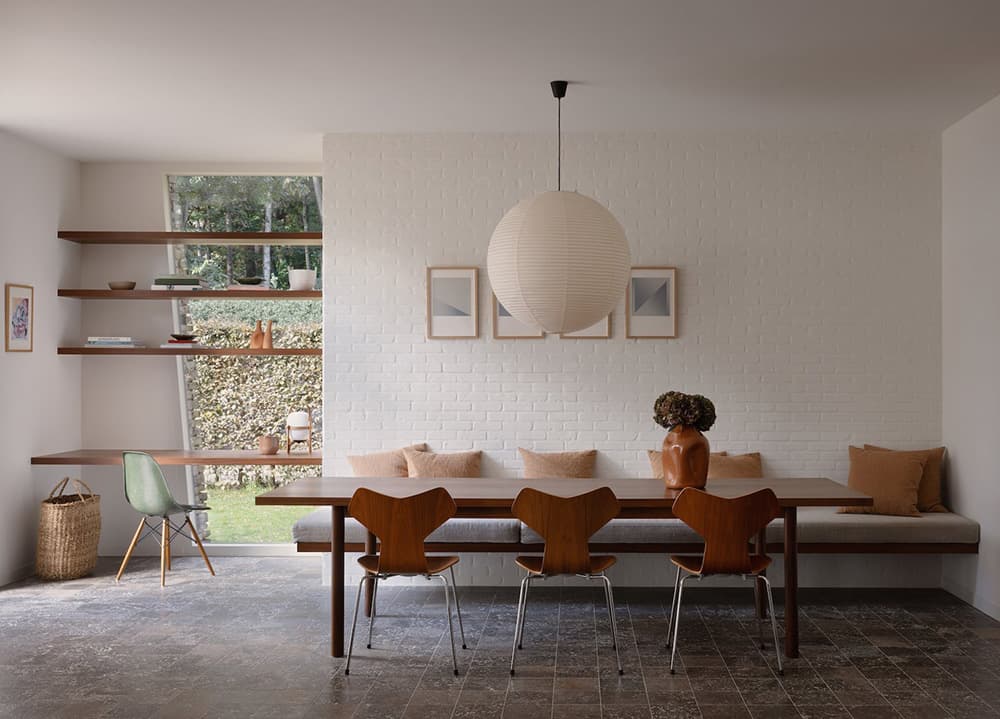
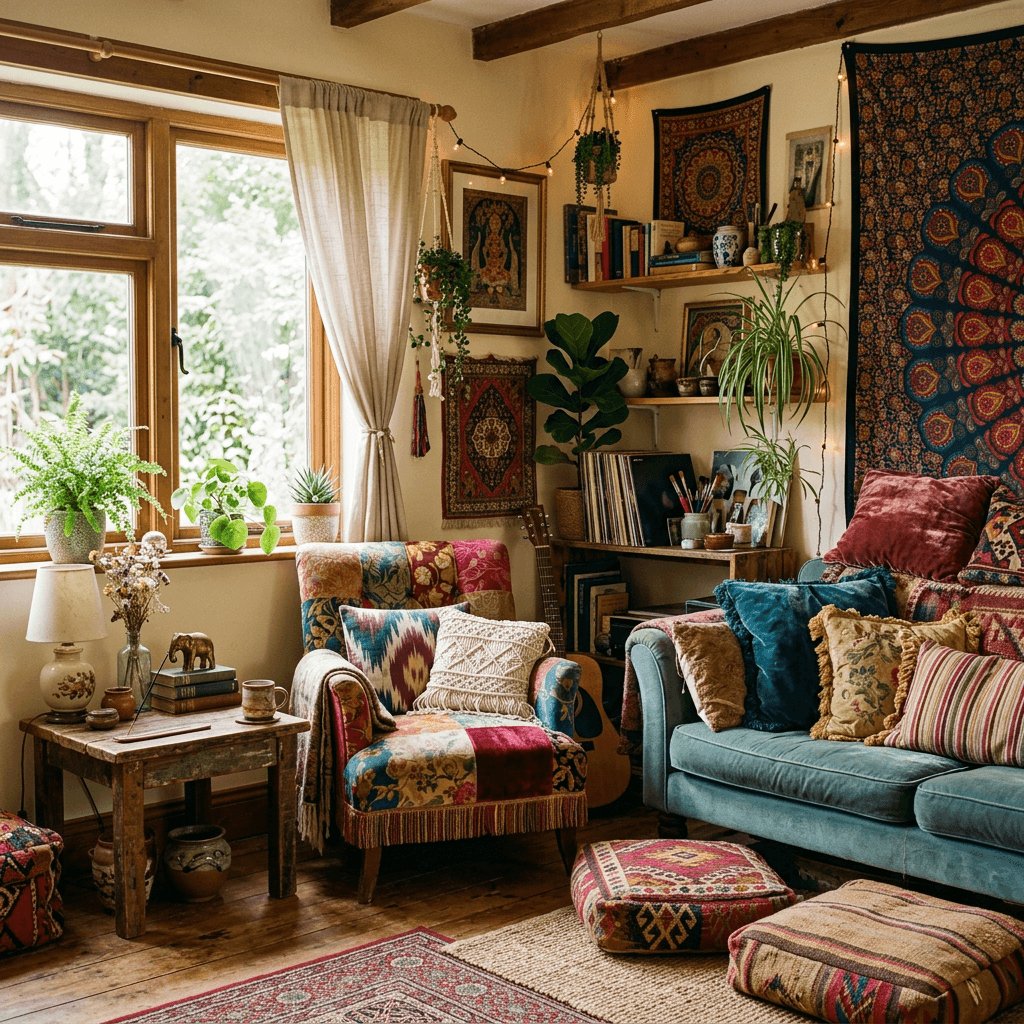
Once you have your values and your material logic, compare them against the named aesthetic categories. Scandinavian: warm neutrals, natural wood, clean geometry, restrained craft. Japandi: adds Japanese wabi-sabi — more asymmetry, more imperfection, lower seating. Warm Organic Modern: travertine, bouclé, terracotta, curves replacing angles. Maximalist: pattern, layering, multiple colours, objects with history. Bohemian: global influences, rich colour, mixed materials, tactile surfaces.
You will probably recognise yourself in more than one. That is correct — most people's taste spans two or three adjacent aesthetics. The practical value of knowing which ones is that it gives you a filter for shopping: does this piece fit my Japandi-adjacent warm-organic sensibility? If yes, consider it. If not, put it back.
Step 5 — Commit and edit
Style is not found in the buying. It is found in the editing. Once you know your aesthetic, the most important action is removing the things that don't fit — the inherited sofa in the wrong colour, the mass-market prints that don't belong to your world, the mismatched cushions that accumulated without intention.
A room with twelve considered objects in a coherent aesthetic reads better than a room with forty objects in three conflicting ones. The hardest part of interior design is not buying the right things — it is having the courage to remove the wrong ones.
If you want a faster path, take the Stil quiz. Select 3–5 room images that speak to you and get a taste profile — style name, keywords, colour palette, and matched products — in under two minutes.