Style Guide · May 2026 · 6 min read
Cottage Style: Why Imperfect, Handmade Spaces Feel Like Luxury
There is a growing reaction against the perfectly identical, the algorithmically selected, the object that could belong to anyone. Quiet Craft is what's replacing it — handmade ceramics, woven walls, artisan objects that carry the mark of the person who made them. Here is why it matters and how to bring it into your home.
The reaction against mass production
The paradox of the internet age is that access to everything has made interiors more homogeneous, not less. When anyone can buy the same HAY chair or the same IKEA KALLAX, the rooms that feel distinctive are the ones that contain things you can't simply add to a cart.
Handmade objects have always existed, but Quiet Craft describes a specific cultural turn — a preference for the imperfect, the unhurried, the made-by-hand — that is gaining momentum precisely because its opposite is so dominant. The slight irregularity in the rim of a thrown bowl, the uneven warp in a hand-woven textile, the fingerprint pressed into wet clay — these imperfections are now the most desirable qualities an object can have. They prove that a person made it.
This is not nostalgia. Quiet Craft is not about going back to some pre-industrial craft tradition. It is about choosing, consciously, to bring objects with human presence into spaces that would otherwise be defined entirely by industrial production.
What Quiet Craft actually means for your home
A Quiet Craft interior is selective — perhaps more selective than minimalism, because each object must justify its place not just functionally but as something worth keeping. The standard is not beauty alone, but beauty with presence: an object that communicates something about how it was made and by whom.
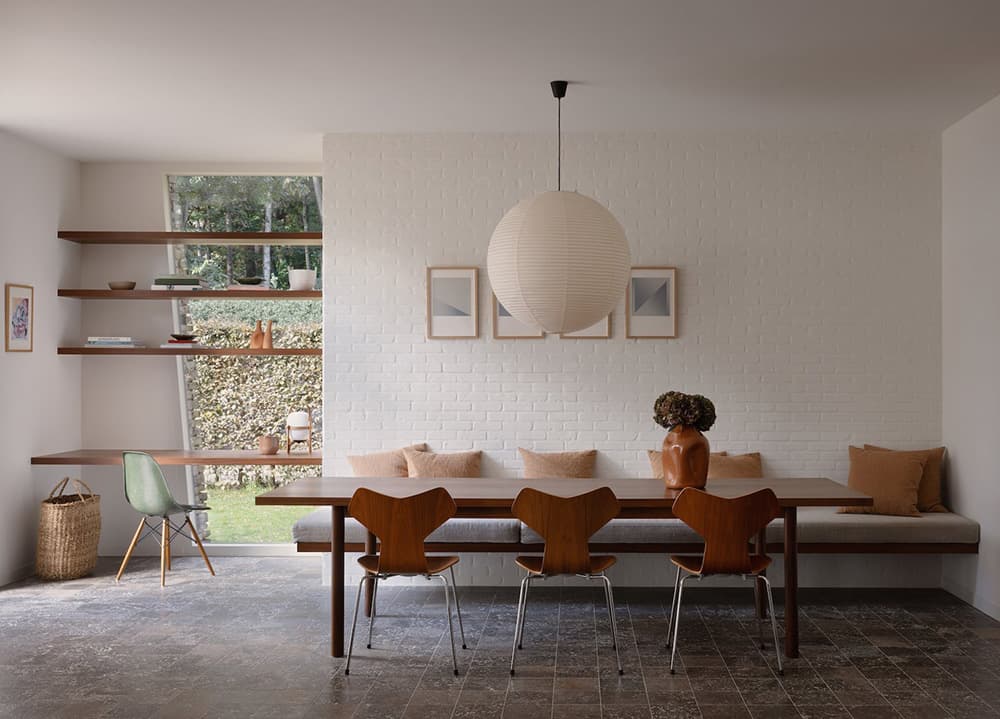
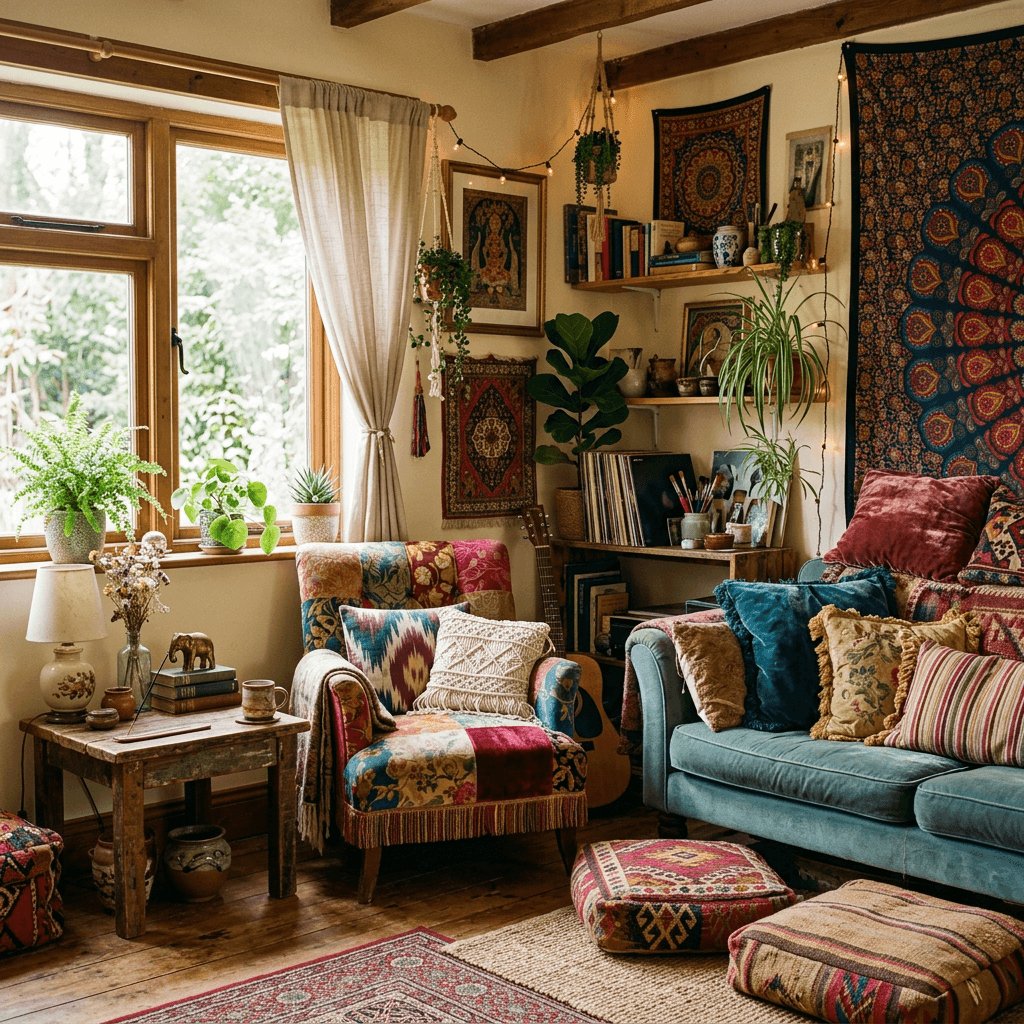
In practice, this means ceramics over mass-produced tableware. Woven wall hangings over printed canvases. Hand-knotted rugs over machine-made pile. A single piece of studio glass over a shelf of identical bud vases. The palette follows the materials: raw clay whites, ash greys, the amber of undyed wool, the brown-black of burnished iron. Nothing is precious in a fragile sense — Quiet Craft objects are meant to be used, to age, to acquire patina.
The Quiet Craft room is not maximalist. It is highly edited. Five considered objects arranged with intention say more than thirty identical ones.
Where to find it — and what to spend
The brands working most consistently in this register span a wide price range.
At the premium end, Ferm Living's craft-adjacent pieces — boucle cushions, woven textiles, hand-glazed ceramics — have genuine artisan quality at accessible-premium prices. Normann Copenhagen's Form Chair and Mat Chair (hemp/eelgrass) both sit in the Quiet Craft territory: honest materials, visible construction, objects that improve with use.
For ceramics specifically, the most interesting work comes from small studios — Portuguese, Scandinavian, and Japanese makers who sell through their own websites and through curated online shops. H&M Home and Zara Home both carry accessible ceramic pieces that read as more handmade than their price suggests; the key is choosing pieces with visible glaze variation or irregular form rather than the perfectly uniform options.
For textiles, look for hand-knotted or hand-woven rugs over machine-made pile — the price difference is significant but so is the quality gap. A hand-knotted rug in undyed wool from a small Portuguese or Moroccan studio will outlast five machine-made alternatives and look better as it ages.