Style Guide · June 2026 · 7 min read
Warm Minimalism: The Interior Aesthetic Defining 2026
Warm organic modern is the most significant interior shift of the last three years — a decisive turn away from the cool restraint of Japandi toward something earthier, more tactile, and more genuinely warm. Here is what it means, where it comes from, and how to live inside it.
Why the trend is happening now
Every design movement is a reaction. Japandi emerged from exhaustion with maximalism — a hunger for quiet, for restraint, for rooms that don't shout. Warm organic modern is a reaction to Japandi itself. After years of cool greys and white walls and the studied emptiness of the Scandi-Japanese hybrid, rooms began to feel chilly. The warmth had been designed out of them.
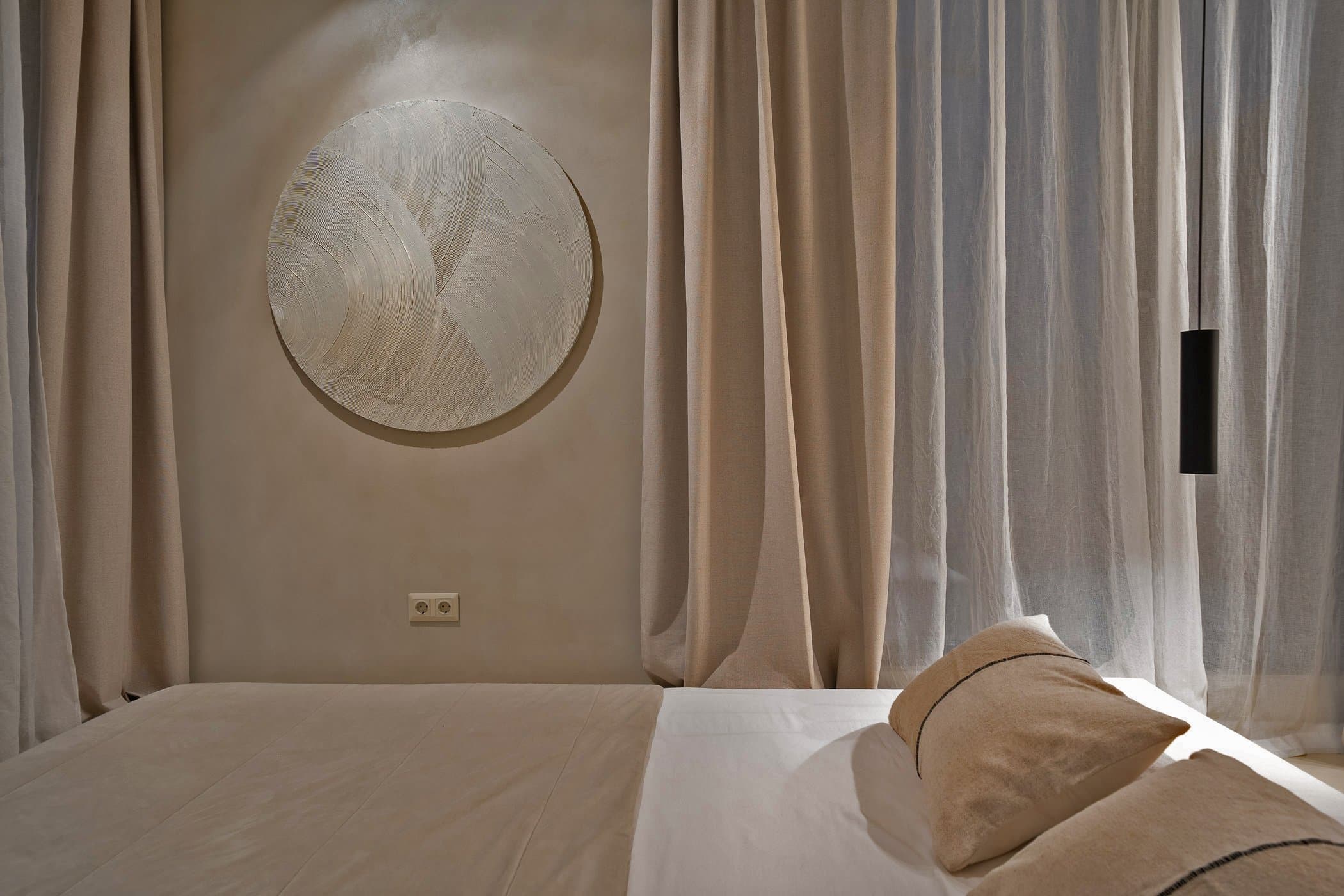
Warm organic modern restores it. The palette moves from grey-white to travertine, from charcoal to terracotta, from cool stone to the amber of afternoon light on raw linen. Forms soften — the sharp rectangle gives way to the ellipse, the curved sofa back, the irregularly thrown ceramic. The room doesn't look designed. It looks exhaled.
Key materials: travertine, bouclé, terracotta
Three materials define the warm organic interior above all others.
Travertine — or travertine-effect surfaces — is the signature stone of the moment. Its warm cream tone, its natural pitting and variation, its weight and substance give it a presence that polished marble no longer has. Used as a coffee table top, a side table base, or a bathroom surround, travertine immediately grounds a room in something geological and permanent.
Bouclé fabric is the tactile counterpart. The looped, nubby surface has warmth in the literal sense — it invites touch, it diffuses light rather than reflecting it, and it sits in the warm neutral range that the organic modern palette requires. A bouclé sofa in sand or ivory is the single most impactful purchase in this aesthetic.
Terracotta — in ceramics, in plasters, in stone tiles — brings the warmth of fired earth. It works as an accent colour in cushions and vases, or as a wall treatment that gives a room a quiet, Mediterranean depth.
How to mix it with what you already have
Warm organic modern doesn't require a full reset. Most existing furniture — particularly if it skews Scandinavian or Japandi — is already in the right territory. The update is in the layering.
If you have a grey or white linen sofa, replace the cushions with bouclé in ivory or warm sand. Add a curved ceramic vase in terracotta or raw clay white. Introduce a travertine-effect side table or coffee table. Swap any cool-grey textiles for warm linen, undyed wool, or a rough jute rug.
The transformation comes from shifting the colour temperature of the room — from cool to warm — without changing the fundamental vocabulary. Japandi and warm organic modern are cousins; what changes is the temperature, not the grammar.
The pieces to buy first
If you're building a warm organic interior from scratch, the hierarchy of purchases is clear.
A sofa in bouclé, curved or soft in profile — Ferm Living's Catena or HAY's Mags in a warm oat fabric — anchors the room. From there, a travertine or stone-effect coffee table provides the material contrast. A brass pendant or table lamp — not polished, but brushed or aged — adds the warm metallic note.
For decorative objects, hand-thrown ceramics in undyed clay whites or terracotta are the authentic choice over anything mass-produced. A single well-chosen ceramic bowl says more than a shelf of identical objects. H&M Home, Zara Home, and smaller ceramic studios all offer accessible options; Ferm Living and &Tradition sit at the premium end.
The rug completes it: a flat-woven or hand-knotted piece in a warm neutral — off-white, undyed wool, pale sand — grounds the room without competing with the other surfaces.